
Understanding Fabric Weaving Techniques: The Art Behind Every Thread
You probably wore three completely different types of fabric today without even thinking about it. Your cotton t-shirt, your jeans, and that smooth pillowcase you slept on last night — they’re all mad

Weaving is one of those things we see every day but never really think about. We wear it, sleep on it, and sit on it constantly. But here’s the interesting part: the pattern used to join threads together decides almost everything about a fabric — how strong it is, how it feels, how it hangs, whether it shines, and even how much it wrinkles. Change the weaving pattern, and you completely change what the fabric can do.
Let’s look at the three main weaving techniques that make up most of the fabric around you: plain weave, twill weave, and satin weave. Once you understand these, you’ll start noticing them everywhere.
Plain Weave: The Most Basic Pattern
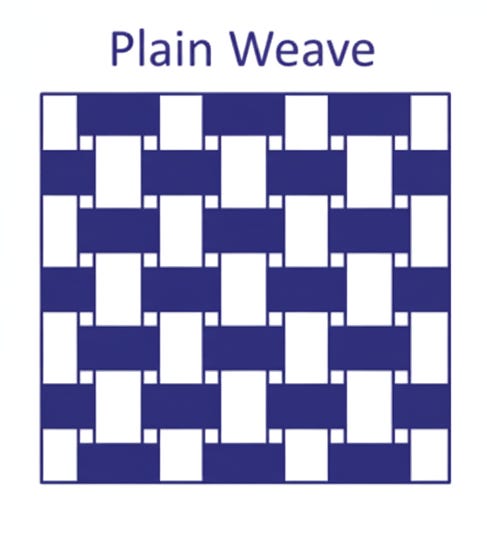
Plain weave is the simplest way to make fabric. You take your up-and-down threads (called the warp) and your side-to-side threads (called the weft), then you alternate them — over, under, over, under. Each horizontal thread goes over one vertical thread, then under the next one. This pattern keeps repeating across the whole piece of fabric.
This makes a balanced and stable fabric. Because the threads cross each other so many times, plain weave fabrics are usually strong and keep their shape well. If you look closely, the surface looks like a simple grid, and both sides of the fabric look almost the same.
But there are some downsides. Plain weave fabrics don’t stretch much because that tight over-under pattern doesn’t give the threads room to move. They also wrinkle pretty easily. But what you get is a fabric that’s tough, lets air through, and is easy to wash and take care of.
You’ll find plain weave in tons of different materials. Cotton shirts, bed sheets, canvas bags, and even fancy fabrics like organza and taffeta all use this pattern. Most dress shirts are plain weave. So are handkerchiefs and those strong bags people carry books in. It’s the most common type of weaving in the world.
Plain weave has been used for thousands of years because it just works. When you need fabric that’s reliable and strong enough for everyday use, this is where you start.
Twill Weave: The Pattern with Diagonal Lines
Look really closely at your jeans and you’ll see tiny diagonal lines going across the fabric. That’s twill weave, and those diagonal lines are what make it different from plain weave.
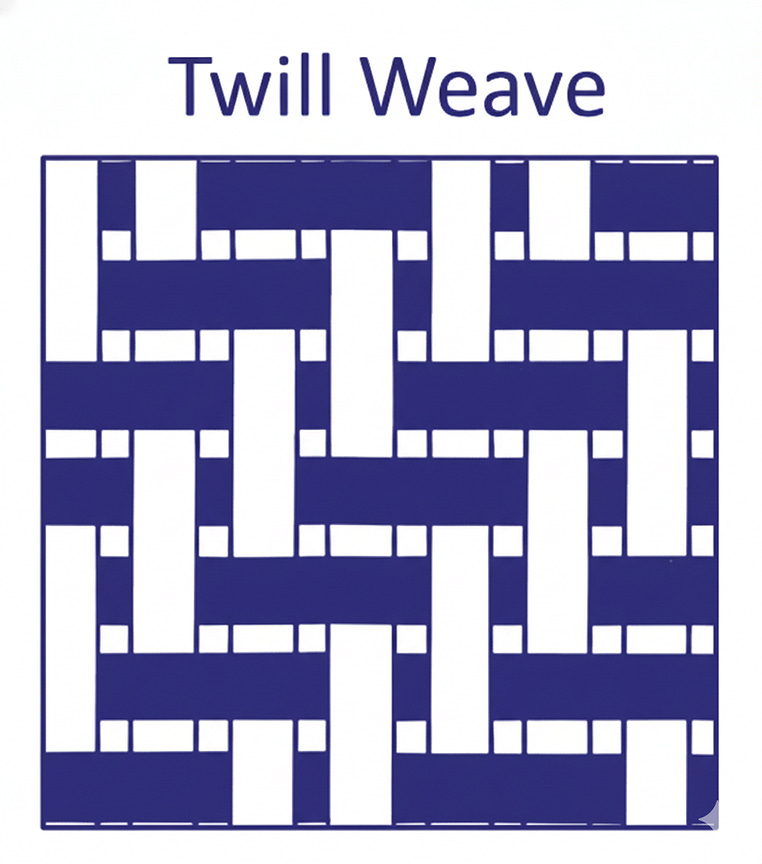
The pattern is a bit more complicated. Instead of going over one thread and under one thread, the horizontal thread goes over two or more vertical threads, then under one or more. But here’s the important part: each new row shifts the pattern just a little bit to the left or right. That shift creates those diagonal lines you can see and feel on the surface.
This changes how the fabric acts. Twill weave makes thicker, heavier fabric than plain weave, even if you use the same threads. The diagonal pattern also makes the fabric more flexible — it flows better and bends more easily. It doesn’t wrinkle as much as plain weave because the threads support each other in that diagonal pattern.
Denim (the fabric used for jeans) is probably the most famous twill weave fabric. But once you start looking, you’ll see it everywhere. The pants people wear to school or office (called chinos), military uniforms, and even some couch fabrics use twill weaving. That’s because it’s tough and lasts a long time even if you wear it a lot and wash it often.
The diagonal lines can go in different directions and can be thin or thick depending on how you change the weaving pattern. Some twill fabrics have lines you can barely see, while others have really obvious ridges.
What makes twill really useful is that it’s both strong and comfortable. It’s tougher than plain weave but still hangs naturally and doesn’t feel stiff. That’s why so many casual clothes and work clothes use twill weaving.
Satin Weave: The Smooth and Shiny One
Satin weave is totally different from the other two. Instead of focusing on strength, it focuses on looking good and feeling smooth.
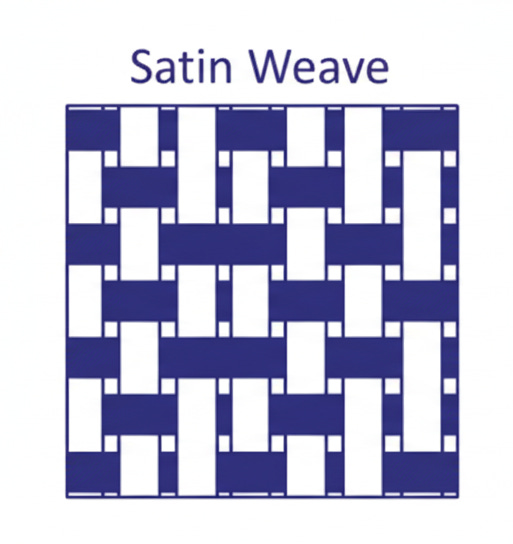
Here’s how it works: the horizontal threads pass over a bunch of vertical threads (usually four to eight) before going under just one. These long sections of thread that don’t cross anything are called “floats.” They create a smooth surface where light can bounce off easily, which is why satin looks shiny and feels silky.
This means one side of satin fabric is smooth and shiny, while the other side is dull and rough. That’s because most of what you see on the shiny side is threads all running in the same direction, with very few places where they cross each other.
This makes beautiful fabric, but it has problems. Those long floating threads can snag easily — if you catch a thread on something sharp, it might pull and leave a visible mark. Satin isn’t as strong as plain or twill weave because the threads don’t cross each other very often. It also tends to slip and slide around, which makes it harder to sew.
But when you want something fancy and luxurious, satin is perfect. Evening gowns, expensive bed sheets, and fancy curtains often use satin. The fabric is heavy and flows in those beautiful folds you see in formal dresses.
Here’s something interesting: “satin” actually means the weaving pattern, not what the threads are made of. You can make satin from silk (which creates the most expensive kind), but you can also make it from polyester, cotton, or even wool. The weaving pattern creates that smooth, shiny surface no matter what material you use.
How Designers Choose Weaves
Designers don’t just pick any weave randomly. The weaving technique is a really important decision that controls what the fabric can do.
Need fabric that won’t wrinkle for work clothes? Twill is your best choice. Want something that lets air through and is easy to print designs on? Plain weave is better. Making a fancy dress that needs to shine under lights? Satin gives you that sparkle.
If you made the same shirt using different weaves, it would feel and act completely differently. A dress shirt made with satin would be too slippery and delicate to wear every day. Jeans made with plain weave wouldn’t be as tough or hold their shape like real denim does. A fancy gown made with canvas would look terrible and wouldn’t flow nicely.
Understanding these differences helps explain why certain fabrics are used for certain things. It’s not random — people match the weave type to what the fabric needs to do.
Different Versions of the Basic Weaves
These three basic weaves have lots of variations. Plain weave can be changed by using thicker or thinner threads to create different textures. Twill variations include herringbone (where the diagonal lines change direction back and forth) and houndstooth (a twill pattern that makes a checkered design).
Satin weave has a close relative called sateen, which uses the same pattern but with cotton instead of silk. The result is fabric with a gentle shine instead of satin’s strong shine — it’s good for bed sheets that feel nice but aren’t too slippery.
Some fabrics combine different techniques. For example, damask uses both satin and plain weave in different areas to create fancy patterns. The different weaves reflect light differently, so you can see the designs without using different colored threads.
The Science Behind It
There’s real science in these patterns. How many times the threads cross each other affects how strong the fabric is — more crossing points mean stronger fabric, which is why plain weave is so tough. Which direction the threads face affects how light reflects off it, which is why satin shines and twill has those diagonal lines.
The number of threads matters, but the weave pattern matters more. Tightly woven plain weave cotton will often last longer than loosely woven satin, even if the satin has more threads. The weave creates the basic structure of the fabric.
Even how fabric shrinks, stretches, or takes in dye depends partly on the weave. Plain weave fabrics usually shrink evenly. Twill might stretch a little bit along those diagonal lines. Satin can get twisted out of shape because those long floats aren’t held down tightly.
From Ancient Times to Today
These weaving techniques aren’t new — they’re thousands of years old. Scientists have found plain weave fabrics from prehistoric times. Twill shows up in ancient Chinese and European cloth. Satin weaving was probably invented in medieval China and became a symbol of luxury in many cultures.
What’s changed is how fast we can make fabric now. Modern machines can weave fabric incredibly quickly while keeping it perfect across huge lengths. Computer-controlled looms can create complicated patterns that would take months to make by hand.
But the basic ideas are the same. Someone who wove fabric in ancient Egypt would recognize how a modern plain weave shirt is made. The techniques work the same way — only the tools have gotten better.
Why You Should Care
You might think this is interesting but not really useful. But here’s why it matters: understanding weaves helps you make smarter choices about the things you buy.
When you’re buying bed sheets, knowing that percale uses plain weave (feels crisp and cool) while sateen uses satin weave (feels smooth and warmer) helps you choose what you’ll like better. When you look at clothing labels, you can guess how the fabric will hold up and whether it’s right for what you need. That tag saying “100% cotton” could mean heavy canvas, light and airy fabric, or smooth sateen — it all depends on the weave.
It also helps you appreciate the work that goes into making things. These days, woven fabrics are cheap and everywhere, so we don’t think about them. But every piece of fabric represents choices about structure, purpose, and design. Someone had to figure out which weave would work best for what it’s being used for.
The Hidden Patterns Around Us
Next time you get dressed, take a few seconds to really look at what you’re wearing. Feel the texture of your shirt — is it that slightly rough surface of plain weave? Check your pants for those diagonal lines of twill. Notice how that smooth fabric hangs differently from the tough material of your backpack.
These patterns are all around us, working so well that we’ve stopped noticing them. But they’re not accidents. Each one is a specific solution to the problem of turning loose threads into useful fabric.
The basic way of crossing threads together hasn’t changed in thousands of years, but we keep finding new uses for it. Modern technical fabrics use advanced weaves to make materials that pull sweat away from your body, stretch in certain directions, or change how they work in different situations. The same basic techniques that made ancient cloth are now being used to make bulletproof vests and materials for airplanes.
That’s the real point here: simple doesn’t mean boring or unimportant. Plain weave, twill, and satin are basic techniques, but they’re important for a reason. They work, they can do many different things, and they’ve been useful in every culture throughout history.
So these are the hidden patterns we wear every day. Now that you know what to look for, you’ll start seeing them everywhere.